God give us grace. . .
to see
beyond the gleam and glitter
of our tinseled trees
a dim lit stable
not at all like these,
to hear
above the clash and clamor
of the market throng
an angel's call for peace
in silent song,
to feel
in all the merry madness
of our festive cheer
the Savior's presence
in our hearts this year.
(from Now, That's a Miracle!)
Tuesday, December 24, 2013

Thursday, October 24, 2013
SO DON’T ASK!
Luke 18:16 (NRSV) - But Jesus called for them and said, "Let the little children come to me, and do not stop them; for it is to such as these that the kingdom of God belongs."
 To give a "children's sermon"
is quite a daunting task,
and many pastors stumble
when they begin to ask
some simple sounding questions,
their preaching skills to flaunt.
What happens when they don't get
the answers that they want?
With sometimes shocking candor
and innocence a child
can make a congregation
go absolutely wild.
So those who ask a question
of children must have nerve.
If it's too open-ended,
they'll get what they deserve!
 To give a "children's sermon"
is quite a daunting task,
and many pastors stumble
when they begin to ask
some simple sounding questions,
their preaching skills to flaunt.
What happens when they don't get
the answers that they want?
With sometimes shocking candor
and innocence a child
can make a congregation
go absolutely wild.
So those who ask a question
of children must have nerve.
If it's too open-ended,
they'll get what they deserve!
Tuesday, October 22, 2013
LET THE LITTLE ONES COME
Luke 18:15-17 (NRSV) - People were bringing even infants to him that he might touch them; and when the disciples saw it, they sternly ordered them not to do it. 16 But Jesus called for them and said, "Let the little children come to me, and do not stop them; for it is to such as these that the kingdom of God belongs. 17 Truly I tell you, whoever does not receive the kingdom of God as a little child will never enter it."

It has always been a mystery to some
why the twelve refused to let the children come
close enough to feel the touch of Jesus’ hand.
If one thinks about it, one might say off-hand,
the disciples were like us in that respect,
who assume that busy people will object
to a child’s consuming any of their time
as if such an interruption were a crime.
There are some adults, who, though it is absurd,
think that children should be neither seen nor heard!
How removed from those who think like that was he
who said, “Let the little children come to me.
For to such as these God’s kingdom does belong.
Not to let the children come to me is wrong.”
Those who don’t receive the kingdom as a child
will not enter it.” ---for love has been defiled.

It has always been a mystery to some
why the twelve refused to let the children come
close enough to feel the touch of Jesus’ hand.
If one thinks about it, one might say off-hand,
the disciples were like us in that respect,
who assume that busy people will object
to a child’s consuming any of their time
as if such an interruption were a crime.
There are some adults, who, though it is absurd,
think that children should be neither seen nor heard!
How removed from those who think like that was he
who said, “Let the little children come to me.
For to such as these God’s kingdom does belong.
Not to let the children come to me is wrong.”
Those who don’t receive the kingdom as a child
will not enter it.” ---for love has been defiled.
Monday, October 21, 2013
PRAYING CONTRAST
Lectionary text: Luke 18:9-14 (NRSV) - He also told this parable to some who trusted in
themselves that they were righteous and regarded others with contempt:
10 "Two men went up to the temple to pray, one a Pharisee and the other a
tax collector. 11 The Pharisee, standing by himself, was praying thus,
'God, I thank you that I am not like other people: thieves, rogues,
adulterers, or even like this tax collector. 12 I fast twice a week; I
give a tenth of all my income.' 13 But the tax collector, standing far
off, would not even look up to heaven, but was beating his breast and
saying, 'God, be merciful to me, a sinner!' 14 I tell you, this man went
down to his home justified rather than the other; for all who exalt
themselves will be humbled, but all who humble themselves will be
exalted."

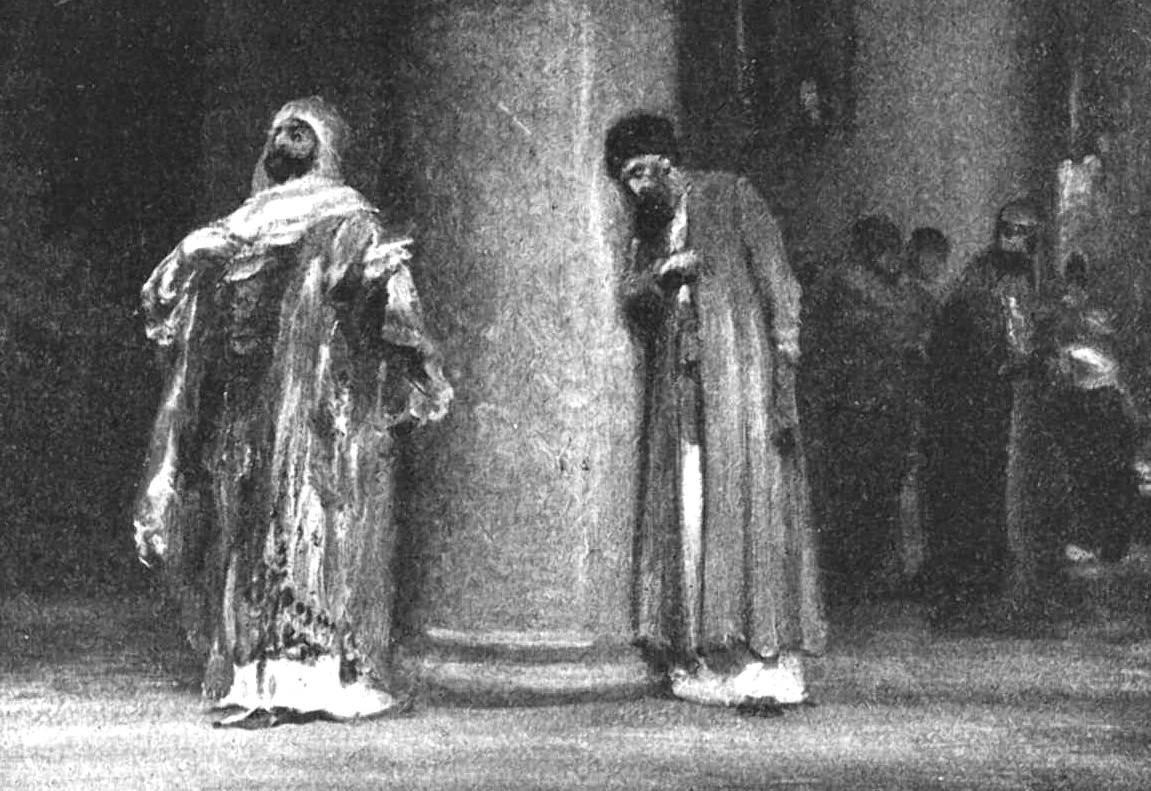
To some who trusted in themselves, Jesus described one day
two men who went up to the holy temple just to pray.
“I thank you, God, that I am not like other people, who
are thieves, adulterers, and rogues ---that tax collector, too.
I give a tenth of my income. I fast two times a week.”
Thus proudly and self-righteously the Pharisee did speak.
But standing at a distance without lifting up his head,
the tax collector beat his breast: “Have mercy, God,” he said,
“on me, a sinner.” Jesus then the parable applied:
“I tell you, this man, not the Pharisee, was justified.
For all who do exalt themselves will be humbled,” he said,
“But those who have humbled themselves, God will exalt instead!
To some who trusted in themselves, Jesus described one day
two men who went up to the holy temple just to pray.
“I thank you, God, that I am not like other people, who
are thieves, adulterers, and rogues ---that tax collector, too.
I give a tenth of my income. I fast two times a week.”
Thus proudly and self-righteously the Pharisee did speak.
But standing at a distance without lifting up his head,
the tax collector beat his breast: “Have mercy, God,” he said,
“on me, a sinner.” Jesus then the parable applied:
“I tell you, this man, not the Pharisee, was justified.
For all who do exalt themselves will be humbled,” he said,
“But those who have humbled themselves, God will exalt instead!
Friday, October 18, 2013
WILL THERE BE FAITH?
Lectionary text: Luke 18:8b (NRSV) ". . . And yet, when the Son of Man comes, will he find faith on earth?"
The question Jesus asked the twelve
now hear for what it’s worth:
Whene’er the Son of Man shall come,
will he find faith on earth?
The question Jesus asked the twelve
now hear for what it’s worth:
Whene’er the Son of Man shall come,
will he find faith on earth?
Thursday, October 17, 2013
KEEP ON PRAYING
Lectionary text: Luke 18:1-8 - (NRSV) Then Jesus told them a parable about their need to pray always and not to lose heart. 2 He said, "In a certain city there was a judge who neither feared God nor had respect for people. 3 In that city there was a widow who kept coming to him and saying, 'Grant me justice against my opponent.' 4 For a while he refused; but later he said to himself, 'Though I have no fear of God and no respect for anyone, 5 yet because this widow keeps bothering me, I will grant her justice, so that she may not wear me out by continually coming.'" 6 And the Lord said, "Listen to what the unjust judge says. 7 And will not God grant justice to his chosen ones who cry to him day and night? Will he delay long in helping them? 8 I tell you, he will quickly grant justice to them. And yet, when the Son of Man comes, will he find faith on earth?"
 The Master told a parable about an unjust judge
who, when a woman came to him for justice, would not budge,
because he had no fear of God, for people no respect.
But her persistence finally had its desired effect.
“Because she bothers me,” he said, “I think it would be best,
before this woman wears me out, that I grant her request.”
Then Jesus said, “Listen to what that unjust judge has said.”
He made sure that this message sticks in each and every head:
Will God not grant his chosen ones, who pray both day and night,
the help and justice they deserve for striving to do right?”
So keep on praying, knowing that the God who cares is there,
and all the faithful can be sure God answers every prayer,
not necessarily the way we might have hoped he would,
but through the eyes of faith we'll see God's way is always good!
 The Master told a parable about an unjust judge
who, when a woman came to him for justice, would not budge,
because he had no fear of God, for people no respect.
But her persistence finally had its desired effect.
“Because she bothers me,” he said, “I think it would be best,
before this woman wears me out, that I grant her request.”
Then Jesus said, “Listen to what that unjust judge has said.”
He made sure that this message sticks in each and every head:
Will God not grant his chosen ones, who pray both day and night,
the help and justice they deserve for striving to do right?”
So keep on praying, knowing that the God who cares is there,
and all the faithful can be sure God answers every prayer,
not necessarily the way we might have hoped he would,
but through the eyes of faith we'll see God's way is always good!
Wednesday, October 16, 2013
DON’T LOOK BACK!
Luke 17:32 (NRSV) - Remember Lot's wife.

Once you have joined the race of faith and started down the track,
just fix your eyes upon the goal ahead, and don’t look back.
A glance behind is all it takes to throw you out of whack
by causing you to stumble or to swerve, so don’t look back.
For sin is always in pursuit and seeking to attack.
But sin can never overtake you, if you don’t look back.
“Remember Lot’s wife,” Jesus said. What was that woman’s fault?
She looked back longingly, and so became a post of salt.
Of Sodoms and Gomorrahs in this world there is no lack.
So leave them all behind you, and remember: DON’T LOOK BACK!

Once you have joined the race of faith and started down the track,
just fix your eyes upon the goal ahead, and don’t look back.
A glance behind is all it takes to throw you out of whack
by causing you to stumble or to swerve, so don’t look back.
For sin is always in pursuit and seeking to attack.
But sin can never overtake you, if you don’t look back.
“Remember Lot’s wife,” Jesus said. What was that woman’s fault?
She looked back longingly, and so became a post of salt.
Of Sodoms and Gomorrahs in this world there is no lack.
So leave them all behind you, and remember: DON’T LOOK BACK!
Tuesday, October 15, 2013
THE SECOND SHORTEST VERSE
Luke 17:32 (NRSV) - Remember Lot's wife.
When through the entire Bible you have diligently swept,
you’ll find the shortest verse consists of two words: “Jesus wept.”
But if to cite the second shortest verse you’re sometime beckoned,
Luke 17 verse 32, with just three words, is second!
When through the entire Bible you have diligently swept,
you’ll find the shortest verse consists of two words: “Jesus wept.”
But if to cite the second shortest verse you’re sometime beckoned,
Luke 17 verse 32, with just three words, is second!
Monday, October 14, 2013
THE DAYS ARE COMING!

Luke 17:22-30 (NRSV) - Then he said to the disciples, "The days are coming when you will long to see one of the days of the Son of Man, and you will not see it. 23 They will say to you, 'Look there!' or 'Look here!' Do not go, do not set off in pursuit. 24 For as the lightning flashes and lights up the sky from one side to the other, so will the Son of Man be in his day. 25 But first he must endure much suffering and be rejected by this generation. 26 Just as it was in the days of Noah, so too it will be in the days of the Son of Man. 27 They were eating and drinking, and marrying and being given in marriage, until the day Noah entered the ark, and the flood came and destroyed all of them. 28 Likewise, just as it was in the days of Lot: they were eating and drinking, buying and selling, planting and building, 29 but on the day that Lot left Sodom, it rained fire and sulfur from heaven and destroyed all of them 30 --it will be like that on the day that the Son of Man is revealed.
Left: One of many artists' renderings of the Second Coming of Christ
The days are coming when you’ll long the Son of Man to see,
but do not heed the lying claims or false rumors that he
is here or there, for as a lightning flash lights up the sky,
so will the coming of the Son of Man be to the eye.
The day of his revealing will come unexpectedly.
For many, who are unprepared, destruction there will be.
As in the days of Noah, when the flood drowned nearly all,
and in the days of Lot, when all the Sodomites did fall.
The people in both cases had been living normally,
not knowing their extinction would be coming suddenly.
These words are not intended to condemn us from the start,
but to exhort us always to be ready ---mind and heart.
For Jesus’ Second Coming, whether it be soon or late,
demands we live each day as his disciples, while we wait.
Sunday, October 13, 2013
WITHIN OR AMONG?
Luke 17:21b (NRSV) ". . . For, in fact, the kingdom of God is among you."
The kingdom is within you,
some Bible versions say.
The kingdom is among you
or in your midst, some say.
Within you or among you,
translate it either way.
What Jesus said about it
has meaning for today.
The kingdom is within you,
some Bible versions say.
The kingdom is among you
or in your midst, some say.
Within you or among you,
translate it either way.
What Jesus said about it
has meaning for today.
Saturday, October 12, 2013
GOD’S KINGDOM IS AMONG YOU
Luke 17:20-21 (NRSV) - Once Jesus was asked by the Pharisees when the kingdom of God was coming, and he answered, "The kingdom of God is not coming with things that can be observed; 21 nor will they say, 'Look, here it is!' or 'There it is!' For, in fact, the kingdom of God is among you."
The Pharisees demanded
that Jesus tell them when
God’s kingdom would be coming.
He cautioned them again:
Do not spend time predicting
when God’s kingdom will come.
As to the time and season,
it’s better to be dumb.
Don’t look for signs, said Jesus,
to tell you when and where.
The kingdom is among you,
and you should seek it there.
 |
| Painting by James Tissot |
that Jesus tell them when
God’s kingdom would be coming.
He cautioned them again:
Do not spend time predicting
when God’s kingdom will come.
As to the time and season,
it’s better to be dumb.
Don’t look for signs, said Jesus,
to tell you when and where.
The kingdom is among you,
and you should seek it there.
Friday, October 11, 2013
APPRECIATION RATIO
Lectionary text: Luke 17:17 (NRSV) - Then Jesus asked, "Were not ten made clean? But the other nine, where are they?
 Ten lepers Jesus healed one day, but only one returned
to thank him, and because of that another blessing earned.
We tend to think that one came back to thank the Lord is fine,
but Jesus said, "Were not ten cleansed? Where are the other nine?"
Among the blessings God bestows there's one I recommend.
Appreciation is a gift of God, I do contend.
Just think about it, and you'll see exactly why I say,
appreciation is a gift God gives to give away.
How few there are who bother to express their gratitude.
Their failure to give thanks reflects a thoughtless attitude.
Why, hardly anyone these days will take the time to write.
Folks act as if each favor they receive is theirs by right.
The people who express their thanks give other folks a lift,
and that is why I view appreciation as a gift
that one both has and also gives, as faithful stewards do.
So when God's gifts you're listing, add "appreciation," too.

to thank him, and because of that another blessing earned.
We tend to think that one came back to thank the Lord is fine,
but Jesus said, "Were not ten cleansed? Where are the other nine?"
Among the blessings God bestows there's one I recommend.
Appreciation is a gift of God, I do contend.
Just think about it, and you'll see exactly why I say,
appreciation is a gift God gives to give away.
How few there are who bother to express their gratitude.
Their failure to give thanks reflects a thoughtless attitude.
Why, hardly anyone these days will take the time to write.
Folks act as if each favor they receive is theirs by right.
The people who express their thanks give other folks a lift,
and that is why I view appreciation as a gift
that one both has and also gives, as faithful stewards do.
So when God's gifts you're listing, add "appreciation," too.
Thursday, October 10, 2013
"WHERE ARE THE NINE?"
Lectionary passage: Luke 17:11-19 (NRSV) - On the way to Jerusalem Jesus was going through the region between Samaria and Galilee. 12 As he entered a village, ten lepers approached him. Keeping their distance, 13 they called out, saying, "Jesus, Master, have mercy on us!" 14 When he saw them, he said to them, "Go and show yourselves to the priests." And as they went, they were made clean. 15 Then one of them, when he saw that he was healed, turned back, praising God with a loud voice. 16 He prostrated himself at Jesus' feet and thanked him. And he was a Samaritan. 17 Then Jesus asked, "Were not ten made clean? But the other nine, where are they? 18 Was none of them found to return and give praise to God except this foreigner?" 19 Then he said to him, "Get up and go on your way; your faith has made you well."

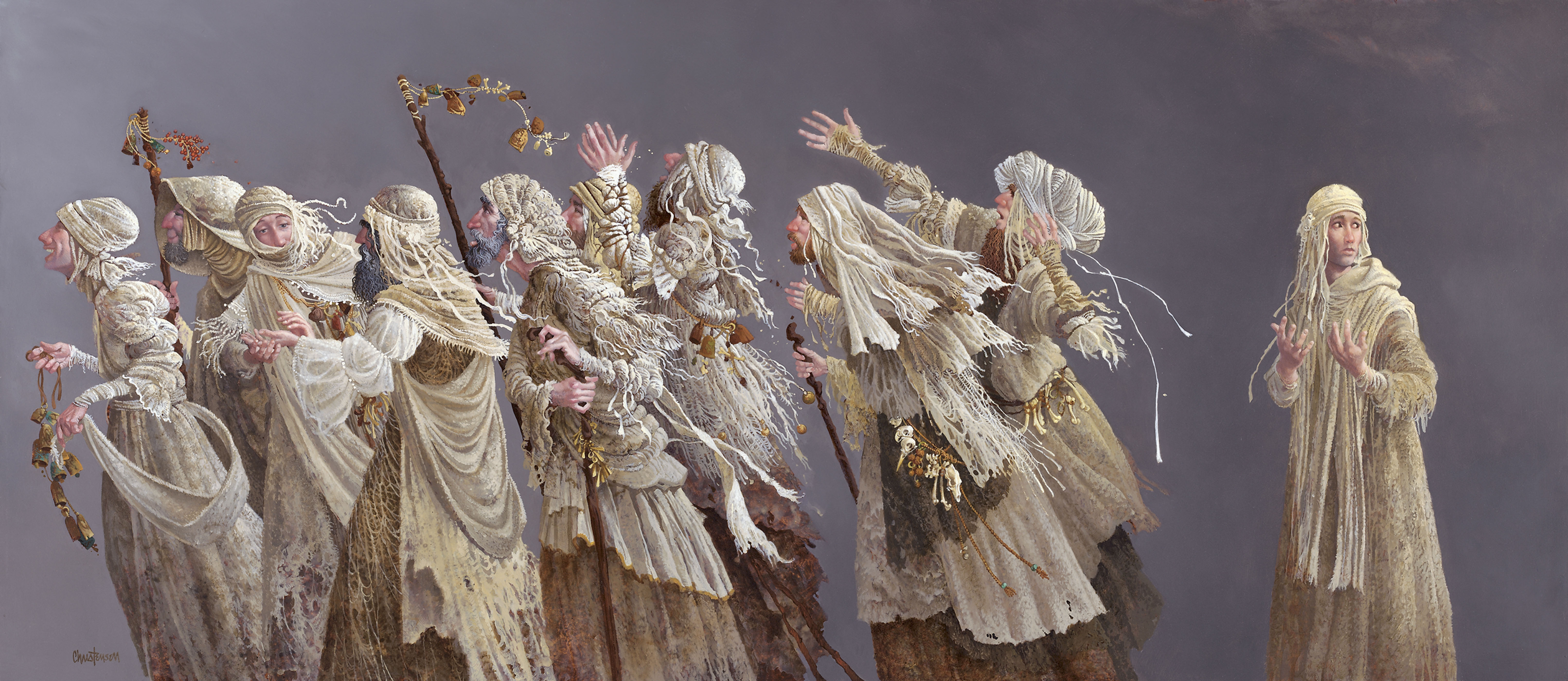
Ten lepers sought cleansing from Jesus one day.
Ten lepers were healed, as they went on their way.
One leper returned to give thanks and rejoice.
Nine lepers went off without raising their voice.
One leper thanked Jesus, who was saturnine:
“Ten lepers were cleansed,” he said. “Where are the nine?”
One leper, a foreigner, did what was right.
Nine lepers took off and were soon out of sight.
Ten lepers were cleansed of their illness that day.
One leper gave thanks, while the rest walked away.
That leper was told that his faith made him well.
Nine lepers went off. Were they heading for hell?
Tuesday, October 8, 2013
SHADES OF DIOGENES
lLectionary passage: Luke 17:7-10 (NRSV) - "Who among you would say to your slave who has just come in from plowing or tending sheep in the field, 'Come here at once and take your place at the table'? 8 Would you not rather say to him, 'Prepare supper for me, put on your apron and serve me while I eat and drink; later you may eat and drink'? 9 Do you thank the slave for doing what was commanded? 10 So you also, when you have done all that you were ordered to do, say, 'We are worthless slaves; we have done only what we ought to have done!'"
I remember how my father thought it queer
and resented it whenever he would hear
someone praised for being honest, and he would
always comment on why anybody should
be commended just for doing what is right.
Everyone should have been honest, in his sight.
But as I’ve become more worldly-wise, I’ve found
there are too few truly honest folks around.
 |
| Diogenes looking for an honest man. |
I remember how my father thought it queer
and resented it whenever he would hear
someone praised for being honest, and he would
always comment on why anybody should
be commended just for doing what is right.
Everyone should have been honest, in his sight.
But as I’ve become more worldly-wise, I’ve found
there are too few truly honest folks around.
Monday, October 7, 2013
IF YOU HAVE FAITH
Lectionary text: Luke 17:6 (NRSV) - The Lord replied, "If you had faith the size of a mustard seed, you could say to this mulberry tree, 'Be uprooted and planted in the sea,' and it would obey you."
 “If you had just a grain of faith, you could say to this tree,”
said Jesus, “‘Be uprooted and be planted in the sea,’
and it would then obey and do exactly as you willed.”
Some people think that feats like this by faith can be fulfilled.
But Jesus did not want his words used so capriciously.
He was employing, as he often did, hyperbole
to make a point he knew demanded greater emphasis,
the sense of which, it seems to me, would be something like
this:
If you had faith no greater than a tiny mustard seed,
you’d find that God is able to work miracles indeed.
 “If you had just a grain of faith, you could say to this tree,”
 said Jesus, “‘Be uprooted and be planted in the sea,’
and it would then obey and do exactly as you willed.”
Some people think that feats like this by faith can be fulfilled.
But Jesus did not want his words used so capriciously.
He was employing, as he often did, hyperbole
to make a point he knew demanded greater emphasis,
the sense of which, it seems to me, would be something like
this:
If you had faith no greater than a tiny mustard seed,
you’d find that God is able to work miracles indeed.
Saturday, October 5, 2013
INCREASE OUR FAITH, O LORD!
Lectionary text: Luke 17:5 (NRSV) - The apostles said to the Lord, "Increase our faith!"
Because of Luke’s expression
that “the apostles said,”
this text was written after
Christ was raised from the dead.
But still its truth is sharper
than any two-edged sword,
and still our constant prayer is,
“Increase our faith, O Lord!”
Because of Luke’s expression
that “the apostles said,”
this text was written after
Christ was raised from the dead.
But still its truth is sharper
than any two-edged sword,
and still our constant prayer is,
“Increase our faith, O Lord!”
Friday, October 4, 2013
SINNERS IN THE CHURCH
Luke 17:3-4 (NRSV) - Be on your guard! If another disciple sins, you must rebuke the offender, and if there is repentance, you must forgive. 4 And if the same person sins against you seven times a day, and turns back to you seven times and says, 'I repent,' you must forgive.
There are too many members in too many churches
 who should be but never have been
brought to task for improper behavior or morals
and asked to repent of their sin.
Those who exercise discipline (elders or deacons)
should care how their church members live.
Jesus says you must always rebuke an offender,
and when there’s repentance, forgive.
But he adds for all Christians this word of precaution
it is most important to give:
If a person has sinned against you many times, and
repents, you must always forgive!
There are too many members in too many churches
 who should be but never have been
brought to task for improper behavior or morals
and asked to repent of their sin.
Those who exercise discipline (elders or deacons)
should care how their church members live.
Jesus says you must always rebuke an offender,
and when there’s repentance, forgive.
But he adds for all Christians this word of precaution
it is most important to give:
If a person has sinned against you many times, and
repents, you must always forgive!
Thursday, October 3, 2013
AMBASSADORS FOR HELL
Luke 17:1-2 (NRSV) - Jesus said to his disciples, "Occasions for stumbling are bound to come, but woe to anyone by whom they come! 2 It would be better for you if a millstone were hung around your neck and you were thrown into the sea than for you to cause one of these little ones to stumble."
 Most people know that life cannot be lived in a safe box,
and on the pilgrimage of faith there will be stumbling blocks.
“But woe to those who put them there!” said Jesus. “It would be
better if they were bound with weights and cast into the sea,
than that they should cause any followers of mine to sin.”
To cause someone to stumble thus may cause God more chagrin
than being one who stumbles, as we all have surely been.
Just think of all the sordid types whom Christ indicts herein ---
drug dealers and pornographers, and film producers who
make violence and immorality appealing, too.
But more, these words of Jesus do indict all those as well
who by their bad example are ambassadors for hell.
and on the pilgrimage of faith there will be stumbling blocks.
“But woe to those who put them there!” said Jesus. “It would be
better if they were bound with weights and cast into the sea,
than that they should cause any followers of mine to sin.”
To cause someone to stumble thus may cause God more chagrin
than being one who stumbles, as we all have surely been.
Just think of all the sordid types whom Christ indicts herein ---
drug dealers and pornographers, and film producers who
make violence and immorality appealing, too.
But more, these words of Jesus do indict all those as well
who by their bad example are ambassadors for hell.
Wednesday, October 2, 2013
LAZARUS AND THE RICH MAN
Lectionary passage: Luke 16:19-31 (NRSV) "There was a rich man who was dressed in purple and fine linen and who feasted sumptuously every day. 20 And at his gate lay a poor man named Lazarus, covered with sores, 21 who longed to satisfy his hunger with what fell from the rich man's table; even the dogs would come and lick his sores. 22 The poor man died and was carried away by the angels to be with Abraham. The rich man also died and was buried. 23 In Hades, where he was being tormented, he looked up and saw Abraham far away with Lazarus by his side. 24 He called out, 'Father Abraham, have mercy on me, and send Lazarus to dip the tip of his finger in water and cool my tongue; for I am in agony in these flames.' 25 But Abraham said, 'Child, remember that during your lifetime you received your good things, and Lazarus in like manner evil things; but now he is comforted here, and you are in agony. 26 Besides all this, between you and us a great chasm has been fixed, so that those who might want to pass from here to you cannot do so, and no one can cross from there to us.' 27 He said, 'Then, father, I beg you to send him to my father's house-- 28 for I have five brothers--that he may warn them, so that they will not also come into this place of torment.' 29 Abraham replied, 'They have Moses and the prophets; they should listen to them.' 30 He said, 'No, father Abraham; but if someone goes to them from the dead, they will repent.' 31 He said to him, 'If they do not listen to Moses and the prophets, neither will they be convinced even if someone rises from the dead.'"

Lazarus lay at the rich man’s gate,
covered with sores, in a sorry state,
longing for crumbs from the rich man’s stores
even as dogs came to lick his sores.
Weaker he grew, till at last one day
Lazarus died and was borne away,
carried by angels where he would be
with Abraham in eternity.
Soon the rich man passed away as well.
Lost in his sin, he was sent to hell
by the one Judge who alone can damn.
Then he looked up and saw Abraham.
Lazarus was by Abraham’s side.
In agony, “Abraham,” he cried,
“let Lazarus in the water dip
and cool my tongue with his finger tip.”
Abraham said, “In your lifetime you
had the good things, but this poor man who
had a hard life, but has here, you see,
comfort, while you are in agony.
“And the great gulf between us and you
could not be crossed if one wanted to.”
Then the man thought of his family,
having great fear for their destiny.
So he then begged Abraham to send
warnings that they might avoid this end.
Abraham said, “They should listen to
Moses, and they have the prophets, too!”
“No, father Abraham,” the man said,
“but if one goes to them from the dead,
they will repent.” Abraham replied:
“Even if one rises who has died,
they will not be satisfied, since they
don’t listen to what the prophets say.”
Does this part mean there are always some
who won’t believe, though the Christ should come
back from the dead, as Jesus foretold?
Yes, there were those in the days of old,
just as there are in the world today
those who ignore what the Scriptures say.
Tuesday, October 1, 2013
THREE UNRELATED VERSES
Luke 16:16-18 (NRSV) - "The law and the prophets were in effect until John came; since then the good news of the kingdom of God is proclaimed, and everyone tries to enter it by force. 17 But it is easier for heaven and earth to pass away, than for one stroke of a letter in the law to be dropped. 18 "Anyone who divorces his wife and marries another commits adultery, and whoever marries a woman divorced from her husband commits adultery."
For someone who was rendering an “orderly” account,
 Luke linked three diverse sayings of our Lord, which no amount
of scholarly research can ever possibly make clear,
as to the reason for their having been inserted here.
One must agree the verses do not tie together well,
and why they were included in this context, who can tell?
We know about the kingdom’s being preached since John, of course.
But what’s it mean to say that people enter it by force?
And why right after that did Jesus then go on to say,
it’s easier for heaven and the earth to pass away
than for one jot or tittle of the law of God to fail?
Was Jesus saying that it should be followed in detail?
If so, his tribute to the law ---was its intent to please
the ones who were the experts in the law, the Pharisees?
The subject of the next verse shifts abruptly to divorce,
remarriage after which becomes adultery perforce.
Again, it’s difficult to know what this verse has to do
with either what has come before or what will follow, too.
One thing about this verse, however, one should note with care,
is that, for Jesus, marriage is a permanent affair.
To marry after one’s divorced becomes adultery;
but Matthew adds except when there has been unchastity.
Which ever version one may choose to guide one through the deeps,
the truth remains that marriage should ideally be for keeps.
For someone who was rendering an “orderly” account,
of scholarly research can ever possibly make clear,
as to the reason for their having been inserted here.
One must agree the verses do not tie together well,
and why they were included in this context, who can tell?
We know about the kingdom’s being preached since John, of course.
But what’s it mean to say that people enter it by force?
And why right after that did Jesus then go on to say,
it’s easier for heaven and the earth to pass away
than for one jot or tittle of the law of God to fail?
Was Jesus saying that it should be followed in detail?
If so, his tribute to the law ---was its intent to please
the ones who were the experts in the law, the Pharisees?
The subject of the next verse shifts abruptly to divorce,
remarriage after which becomes adultery perforce.
Again, it’s difficult to know what this verse has to do
with either what has come before or what will follow, too.
One thing about this verse, however, one should note with care,
is that, for Jesus, marriage is a permanent affair.
To marry after one’s divorced becomes adultery;
but Matthew adds except when there has been unchastity.
Which ever version one may choose to guide one through the deeps,
the truth remains that marriage should ideally be for keeps.
Thursday, September 26, 2013
A TOUCHY TOPIC
Lectionary text: Luke 16:14-15 (NRSV) - The Pharisees, who were lovers of money, heard all this, and they ridiculed him. 15 So he said to them, "You are those who justify yourselves in the sight of others; but God knows your hearts; for what is prized by human beings is an abomination in the sight of God."
 The Pharisees heard Jesus say, “You can’t serve God and money.”
Predictably they did not think what Jesus said was funny,
for they, Luke wrote, loved mammon, and in their own haughty view
they saw themselves as experts in religious matters, too.
And so they ridiculed him for the drastic things he said.
But Jesus, in his unique manner, censured them instead:
“You Pharisees are doing what you have been from the start.
You justify yourself to others, but God knows your heart!”
What human beings value most and strive for day and night
becomes an idol and is thus abhorrent in God’s sight.
Could Jesus’ words not be applied to our society,
where monetary values govern the economy?
And would most people not react as did the Pharisees,
if any one in Jesus name should utter words like these?
 The Pharisees heard Jesus say, “You can’t serve God and money.”
Predictably they did not think what Jesus said was funny,
for they, Luke wrote, loved mammon, and in their own haughty view
they saw themselves as experts in religious matters, too.
And so they ridiculed him for the drastic things he said.
But Jesus, in his unique manner, censured them instead:
“You Pharisees are doing what you have been from the start.
You justify yourself to others, but God knows your heart!”
What human beings value most and strive for day and night
becomes an idol and is thus abhorrent in God’s sight.
Could Jesus’ words not be applied to our society,
where monetary values govern the economy?
And would most people not react as did the Pharisees,
if any one in Jesus name should utter words like these?
Wednesday, September 25, 2013
DIVIDED LOYALTY
Lectionary text: Luke 16:13 (NRSV) - "No slave can serve two masters; for a slave will either hate the one and love the other, or be devoted to the one and despise the other. You cannot serve God and wealth."
 No one can serve two masters,
and down through history
no great devotion has survived
divided loyalty
between God and some idol,
like power, wealth, or fame.
One cannot worship mammon
and pray in Jesus’ name.
and down through history
no great devotion has survived
divided loyalty
between God and some idol,
like power, wealth, or fame.
One cannot worship mammon
and pray in Jesus’ name.
Tuesday, September 24, 2013
IN MUCH AS IN LITTLE
 Lectionary text: Luke 16:10 (NRSV) - "Whoever is faithful in a very little is faithful also in much; and whoever is dishonest in a very little is dishonest also in much."
The one who cheats in little things
will cheat in big things, too.
Dishonest habits that we form
determine what we do.
The little things are tell-tale clues;
to be faithful in such
preindicates a person will
be faithful, too, in much.
Monday, September 23, 2013
ETERNAL TENTS
Lectionary text: Luke 16:9 (NRSV) - And I tell you, make friends for yourselves by means of dishonest wealth so that when it is gone, they may welcome you into the eternal homes.
Eternal habitations:
 the Greek word used means “tents.”
A literal translation
conveys a different sense.
One does not see a tent as
a permanent abode.
A tent is great for nomads,
those who are on the road.
And maybe that’s exactly
what Luke wanted to say,
for those who follow Jesus
are always on the way.
Yet God is ever with us
in our on-going quest,
and where God is our home is,
and our eternal rest.
Eternal habitations:
 the Greek word used means “tents.”
A literal translation
conveys a different sense.
One does not see a tent as
a permanent abode.
A tent is great for nomads,
those who are on the road.
And maybe that’s exactly
what Luke wanted to say,
for those who follow Jesus
are always on the way.
Yet God is ever with us
in our on-going quest,
and where God is our home is,
and our eternal rest.
Sunday, September 22, 2013
THE PARABLE OF THE DISHONEST STEWARD
 Lectionary passage: Luke 16:1-9 (NRSV) - Then Jesus said to the disciples, "There was a rich man who had a manager, and charges were brought to him that this man was squandering his property. 2 So he summoned him and said to him, 'What is this that I hear about you? Give me an accounting of your management, because you cannot be my manager any longer.' 3 Then the manager said to himself, 'What will I do, now that my master is taking the position away from me? I am not strong enough to dig, and I am ashamed to beg. 4 I have decided what to do so that, when I am dismissed as manager, people may welcome me into their homes.' 5 So, summoning his master's debtors one by one, he asked the first, 'How much do you owe my master?' 6 He answered, 'A hundred jugs of olive oil.' He said to him, 'Take your bill, sit down quickly, and make it fifty.' 7 Then he asked another, 'And how much do you owe?' He replied, 'A hundred containers of wheat.' He said to him, 'Take your bill and make it eighty.' 8 And his master commended the dishonest manager because he had acted shrewdly; for the children of this age are more shrewd in dealing with their own generation than are the children of light. 9 And I tell you, make friends for yourselves by means of dishonest wealth so that when it is gone, they may welcome you into the eternal homes.
Of all the parables of Christ this one may be the toughest
for those who think it treats their views of honesty the roughest.
But it’s a comment on the fact that being shrewd and clever
can win one many friends, for sure. It has been thus forever.
The steward had mismanaged all the holdings of his master.
He knew when it was found out, he was heading for disaster.
He called his mater’s debtors and made sure they would be willing
to take him in when he was fired, by lowering their billing.
He told each one to write down less than what each had been owing.
The master praised his steward for the prudence he was showing!
Then Jesus said, “You, too, make friends, but not by being greedy.
And as good stewards, use your funds to help the poor and needy.
“By kindness you will make friends now and have their salutation,
when they receive you into God’s eternal habitation.
Saturday, September 21, 2013
THE OTHER PRODIGAL SON
Luke 15:25-32 (NRSV) - Now his elder son was in the field; and when he came and approached the house, he heard music and dancing. 26 He called one of the slaves and asked what was going on. 27 He replied, "Your brother has come, and your father has killed the fatted calf, because he has got him back safe and sound." 28 Then he became angry and refused to go in. His father came out and began to plead with him. 29 But he answered his father, "Listen! For all these years I have been working like a slave for you, and I have never disobeyed your command; yet you have never given me even a young goat so that I might celebrate with my friends. 30 But when this son of yours came back, who has devoured your property with prostitutes, you killed the fatted calf for him!" 31 Then the father said to him, "Son, you are always with me, and all that is mine is yours. 32 But we had to celebrate and rejoice, because this brother of yours was dead and has come to life; he was lost and has been found.'"

The Parable of the Prodigal Son
we call it familiarly.
The Parable of the Prodigal Sons,
the title perhaps should be.
The elder son served his father quite well,
and never did he depart.
His attitude showed, however, that he
was prodigal in his heart.
Self-righteousness, and self-pity, and pride,
resentment, and jealousy ---
I do not admire this prodigal son,
because he’s too much like me!

The Parable of the Prodigal Son
we call it familiarly.
The Parable of the Prodigal Sons,
the title perhaps should be.
The elder son served his father quite well,
and never did he depart.
His attitude showed, however, that he
was prodigal in his heart.
Self-righteousness, and self-pity, and pride,
resentment, and jealousy ---
I do not admire this prodigal son,
because he’s too much like me!
Friday, September 20, 2013
TWO MORE POEMS ON THE PARABLE OF THE PRODIGAL SON
Luke 15:20 (NRSV) - So he set off and went to his father. But while he was still far off, his father saw him and was filled with compassion; he ran and put his arms around him and kissed him.

THE WAITING FATHER
Our loving God is infinitely kind,
as those who turn and seek forgiveness find.
The wayward child who flees from Satan’s charms
the Father runs to meet with open arms.
And heaven’s hosts echo the joyful sound,
when any child who has been lost is found.
WELCOME HOME!
In all of heaven’s lexicons you comb,
are there two sweeter words than “Welcome home!”?

THE WAITING FATHER
Our loving God is infinitely kind,
as those who turn and seek forgiveness find.
The wayward child who flees from Satan’s charms
the Father runs to meet with open arms.
And heaven’s hosts echo the joyful sound,
when any child who has been lost is found.
WELCOME HOME!
In all of heaven’s lexicons you comb,
are there two sweeter words than “Welcome home!”?
Thursday, September 19, 2013
COMING TO YOURSELF
Luke 15:17 (NRSV) - But when he came to himself he said, '"How many of my father's hired hands have bread enough and to spare, but here I am dying of hunger!"
When you’ve wasted your life and you’ve wallowed in sin,
when you know it is folly to roam,
when you say to yourself, “What a fool I have been!”
and you know that it’s time to go home,
when you you’re luck has run out and your friends are all gone,
and you know in your heart you’ve been wrong,
you have come to yourself if you see the light dawn,
and at last you know where you belong.
When your profligate bridges you’re ready to burn
and your heart tells you what you must do,
you have come to yourself if you want to return
to the Father who’s waiting for you.
 |
| Engraving of the Prodigal Son as aswineherd by Hans Sebald Beham, 1538.(Wikipedia) |
when you know it is folly to roam,
when you say to yourself, “What a fool I have been!”
and you know that it’s time to go home,
when you you’re luck has run out and your friends are all gone,
and you know in your heart you’ve been wrong,
you have come to yourself if you see the light dawn,
and at last you know where you belong.
When your profligate bridges you’re ready to burn
and your heart tells you what you must do,
you have come to yourself if you want to return
to the Father who’s waiting for you.
Wednesday, September 18, 2013
PRODIGAL PARALLEL
 Luke 15:11-32 (NRSV) - Then Jesus said, "There was a man who had two sons. 12 The younger of them said to his father, 'Father, give me the share of the property that will belong to me.' So he divided his property between them. 13 A few days later the younger son gathered all he had and traveled to a distant country, and there he squandered his property in dissolute living. 14 When he had spent everything, a severe famine took place throughout that country, and he began to be in need. 15 So he went and hired himself out to one of the citizens of that country, who sent him to his fields to feed the pigs. 16 He would gladly have filled himself with the pods that the pigs were eating; and no one gave him anything. 17 But when he came to himself he said, 'How many of my father's hired hands have bread enough and to spare, but here I am dying of hunger! 18 I will get up and go to my father, and I will say to him, "Father, I have sinned against heaven and before you; 19 I am no longer worthy to be called your son; treat me like one of your hired hands."' 20 So he set off and went to his father. But while he was still far off, his father saw him and was filled with compassion; he ran and put his arms around him and kissed him. 21 Then the son said to him, 'Father, I have sinned against heaven and before you; I am no longer worthy to be called your son.' 22 But the father said to his slaves, 'Quickly, bring out a robe--the best one--and put it on him; put a ring on his finger and sandals on his feet. 23 And get the fatted calf and kill it, and let us eat and celebrate; 24 for this son of mine was dead and is alive again; he was lost and is found!' And they began to celebrate. 25 "Now his elder son was in the field; and when he came and approached the house, he heard music and dancing. 26 He called one of the slaves and asked what was going on. 27 He replied, 'Your brother has come, and your father has killed the fatted calf, because he has got him back safe and sound.' 28 Then he became angry and refused to go in. His father came out and began to plead with him. 29 But he answered his father, 'Listen! For all these years I have been working like a slave for you, and I have never disobeyed your command; yet you have never given me even a young goat so that I might celebrate with my friends. 30 But when this son of yours came back, who has devoured your property with prostitutes, you killed the fatted calf for him!' 31 Then the father said to him, 'Son, you are always with me, and all that is mine is yours. 32 But we had to celebrate and rejoice, because this brother of yours was dead and has come to life; he was lost and has been found.'"
My brother Herb was seventeen, when he one day in May
got up at dawn, loaded his car, and quietly drove away.
He left a note to tell our parents not to worry, for
he’d make a fortune and not be a burden any more.
Before that morning I had never seen my father cry.
The news hit both my parents like a ton of bricks, and I,
a twelve-year-old, did not know what to think, or say, or do,
for why my brother would run off like that nobody knew.
Tuesday, September 17, 2013
“THIS FELLOW WELCOMES SINNERS”

“This fellow welcomes sinners,” said the scribes and Pharisees.
“They’re not the proper company to keep.”
So Jesus told this parable not guaranteed to please:
“Which one of you, having a hundred sheep
and losing one of them would not leave all the rest behind
and go to find the one that’s gone astray?
And how you do rejoice, when that lost sheep at last you find!
You tell your friends, ‘I found my sheep today!’
Just so in heaven there will be much joy, I say to you ---
more joy about one sinner who repents
than over nine and ninety righteous men and women, who
need no repentance.” What he said makes sense,
but to his hearers was the illustration meaningful?
Apparently it wasn’t clear, and so
to emphasize the point he told another parable
to teach them what they didn’t want to know.
“What woman with ten silver coins, if she should lose just one,
would not keep searching till the coin is found?
And when it’s found, she tells her neighbors that her search is done:
‘Rejoice with me, for my lost coin is found!’
Just so,” he said, “There’s joy among the angels of the Lord
because of every sinner who repents.”
The fact that sinners came to him the Pharisees deplored,
but Jesus hoped to win their penitence.
Wednesday, September 11, 2013
HATING FOR LOVE
Lectionary text: Luke 14:26 (NRSV) - "Whoever comes to me and does not hate father and mother, wife and children, brothers and sisters, yes, and even life itself, cannot be my disciple."
About our hating those we love
I hope I’ve got it straight:
It’s that we hate because we love,
not that we love to hate.
About our hating those we love
I hope I’ve got it straight:
It’s that we hate because we love,
not that we love to hate.
Monday, September 9, 2013
WHEN HATE IS LOVE
Lectionary text: Luke 14:26 (NRSV) - "Whoever comes to me and does not hate father and mother, wife and children, brothers and sisters, yes, and even life itself, cannot be my disciple."
 Can one who loves as Jesus loves,
command someone to hate?
What Jesus is appealing for
is loyalty so great
that nothing else can come before
our faithfulness to him.
Beside our love for Jesus Christ
all human loves seem dim.
It’s not that Christ wants us to hate
those who are close to us.
To think that’s what this saying means
would be preposterous.
But ties of home and family
should never interfere
with our obedience to Christ.
That’s what he’s saying here.
 Can one who loves as Jesus loves,
command someone to hate?
What Jesus is appealing for
is loyalty so great
that nothing else can come before
our faithfulness to him.
Beside our love for Jesus Christ
all human loves seem dim.
It’s not that Christ wants us to hate
those who are close to us.
To think that’s what this saying means
would be preposterous.
But ties of home and family
should never interfere
with our obedience to Christ.
That’s what he’s saying here.
Friday, September 6, 2013
TO BE A DISCIPLE
 Lestionary passage: Luke 14:25-33 (NRSV) - Now large crowds were traveling with him; and he turned and said to them, 26 "Whoever comes to me and does not hate father and mother, wife and children, brothers and sisters, yes, and even life itself, cannot be my disciple. 27 Whoever does not carry the cross and follow me cannot be my disciple. 28 For which of you, intending to build a tower, does not first sit down and estimate the cost, to see whether he has enough to complete it? 29 Otherwise, when he has laid a foundation and is not able to finish, all who see it will begin to ridicule him, 30 saying, 'This fellow began to build and was not able to finish.' 31 Or what king, going out to wage war against another king, will not sit down first and consider whether he is able with ten thousand to oppose the one who comes against him with twenty thousand? 32 If he cannot, then, while the other is still far away, he sends a delegation and asks for the terms of peace. 33 So therefore, none of you can become my disciple if you do not give up all your possessions.
To be a disciple of Jesus today
means seeing our riches as loss,
to follow the truth, and the life, and the way,
and bearing, like Jesus, our cross.
To be a disciple of Jesus demands
that our love for him be so great
that all earthly ties that obscure his commands
in light of Christ’s love are as hate.
To be a disciple means counting the cost
and knowing the price we must pay.
It means not regretting what we may have lost,
and giving possessions away.
To be a disciple of Jesus today
means being the salt of the earth.
But if all its saltiness faded away,
how much would the salt then be worth?
To be a disciple of Jesus today
is not that much different from then,
and what he said then he would still want to say
in challenging women and men.
Wednesday, September 4, 2013
TWO MORE LECTIONARY POEMS
Lectionary passage: Luke 14:7-11 (NRSV) - When he noticed how the guests chose the places of honor, he told them a parable. 8 "When you are invited by someone to a wedding banquet, do not sit down at the place of honor, in case someone more distinguished than you has been invited by your host; 9 and the host who invited both of you may come and say to you, 'Give this person your place,' and then in disgrace you would start to take the lowest place. 10 But when you are invited, go and sit down at the lowest place, so that when your host comes, he may say to you, 'Friend, move up higher'; then you will be honored in the presence of all who sit at the table with you. 11 For all who exalt themselves will be humbled, and those who humble themselves will be exalted."
 When he saw the guests were vying
with each other and were trying
to attain the seats of honor at the feast,
Jesus said that at a wedding
banquet they should not be heading
for the seats of greatest honor but the least.
“If you seek the highest place, then
you may wind up in disgrace, when
your host moves you to the very lowest end.
How much better,” Jesus told them,
to instruct as well as scold them,
for the host to say to you, ‘Move up, my friend!’”
Lectionary passage: Luke 14:12-14 (NRSV) - He said also to the one who had invited him, "When you give a luncheon or a dinner, do not invite your friends or your brothers or your relatives or rich neighbors, in case they may invite you in return, and you would be repaid. 13 But when you give a banquet, invite the poor, the crippled, the lame, and the blind. 14 And you will be blessed, because they cannot repay you, for you will be repaid at the resurrection of the righteous."
How he made those guests all squirm,
as in manner clear and firm
Jesus showed them how good etiquette would look.
Then he turned, as was his way,
to his dinner host that day,
for he would not let the man get off the hook:
“When your guest list you compose,
do not limit it to those
who you think may then invite you in return.
Ask the crippled, poor, and blind.
You’ll be blessed for being kind,
and the righteous resurrection you will earn.”
MOVE UP, FRIEND
with each other and were trying
to attain the seats of honor at the feast,
Jesus said that at a wedding
banquet they should not be heading
for the seats of greatest honor but the least.
“If you seek the highest place, then
you may wind up in disgrace, when
your host moves you to the very lowest end.
How much better,” Jesus told them,
to instruct as well as scold them,
for the host to say to you, ‘Move up, my friend!’”
Lectionary passage: Luke 14:12-14 (NRSV) - He said also to the one who had invited him, "When you give a luncheon or a dinner, do not invite your friends or your brothers or your relatives or rich neighbors, in case they may invite you in return, and you would be repaid. 13 But when you give a banquet, invite the poor, the crippled, the lame, and the blind. 14 And you will be blessed, because they cannot repay you, for you will be repaid at the resurrection of the righteous."
AND NOW, TO OUR HOST. . .
How he made those guests all squirm,
as in manner clear and firm
Jesus showed them how good etiquette would look.
Then he turned, as was his way,
to his dinner host that day,
for he would not let the man get off the hook:
“When your guest list you compose,
do not limit it to those
who you think may then invite you in return.
Ask the crippled, poor, and blind.
You’ll be blessed for being kind,
and the righteous resurrection you will earn.”
Tuesday, September 3, 2013
ANOTHER SABBATH HEALING
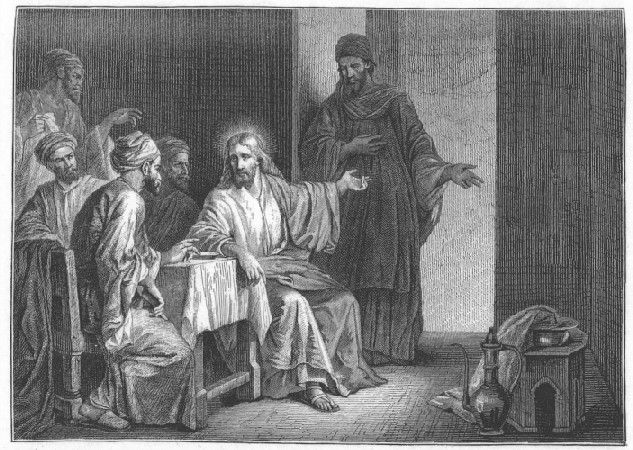 |
| "They were watching him closely." |
On a sabbath day when Jesus was invited out to eat
by a leader of the Pharisees, he knew,
when a man appeared with dropsy and was standing at his feet,
they were watching him to see what he would do.
“On the sabbath if your child or ox should fall into a well,
would you not,” asked Jesus, “pull it out that day?”
All the lawyers and the Pharisees were nonplussed for a spell;
so he healed the man and sent him on his way.
Now, to keep the sabbath holy is important, it is true.
Nor would Jesus ever have it otherwise.
But if on the sabbath acts of love and mercy you should do,
you will keep the day more holy in God’s eyes.
Friday, August 30, 2013
NOT ON MY DAY OFF!
Lectionary passage: Luke 13:14-15 (NRSV) - But the leader of the synagogue, indignant because Jesus had cured on the sabbath, kept saying to the crowd, "There are six days on which work ought to be done; come on those days and be cured, and not on the sabbath day." 15 But the Lord answered him and said, "You hypocrites! Does not each of you on the sabbath untie his ox or his donkey from the manger, and lead it away to give it water?
The leader of a synagogue
while acting like a demagogue,
said to a cripple “Go away!
We don’t cure on the sabbath day.
Our tasks for six days we don’t shirk,
but on the sabbath we don’t work.”
What if you heard your pastor say
“Don’t bother me on my off day.
Don’t have an accident or die
on Monday, when you know that I
am not available to call
for any reason ---none at all!”
How can a Christian minister
dare say to a parishioner
“I’m on the job six days a week,
so do not call me up or seek
my help in some emergency
the day I’ve set aside for me.”?
 |
| Jesus heals a woman on the sabbath. Picture by Standard Publishing |
while acting like a demagogue,
said to a cripple “Go away!
We don’t cure on the sabbath day.
Our tasks for six days we don’t shirk,
but on the sabbath we don’t work.”
What if you heard your pastor say
“Don’t bother me on my off day.
Don’t have an accident or die
on Monday, when you know that I
am not available to call
for any reason ---none at all!”
How can a Christian minister
dare say to a parishioner
“I’m on the job six days a week,
so do not call me up or seek
my help in some emergency
the day I’ve set aside for me.”?
Thursday, August 29, 2013
A DAUGHTER OF ABRAHAM
 |
| Painting by Paulo Veronese |
He is teaching on the sabbath, when she suddenly appears
with her body bent, because she has been crippled eighteen years.
When he sees her, Jesus calls her and says, “Woman, you are free.”
Then he lays his hands upon her and she stands straight instantly!
But the leader of the synagogue is saying to the crowd,
“There are six days when a healing of this nature is allowed.
Come on those days to be cured, but don’t come on the sabbath day.”
Such an overbearing attitude prompts Jesus then to say,
“O you hypocrites, do you not lead your animals away
on the sabbath to get water? And if you can act that way,
should this woman who’s a child of Abraham not be set free
from her eighteen years in Satan’s disabling captivity?”
With these words of Jesus his opponents are all put to shame,
while the people are rejoicing, and are praising Jesus’ name
for the words they have been hearing and the things they’ve seen him do.
What a shame those legalistic leaders cannot see it, too!
Tuesday, August 27, 2013
SUFFERING AND SIN
Luke 13:1-5 (NRSV) - At that very time there were some present who told him about the Galileans whose blood Pilate had mingled with their sacrifices. 2 He asked them, "Do you think that because these Galileans suffered in this way they were worse sinners than all other Galileans? 3 No, I tell you; but unless you repent, you will all perish as they did. 4 Or those eighteen who were killed when the tower of Siloam fell on them--do you think that they were worse offenders than all the others living in Jerusalem? 5 No, I tell you; but unless you repent, you will all perish just as they did."
To a purist’s consternation and a moralist’s chagrin
Jesus taught that suffering is not a measure of one’s sin.
Lest some think that those who suffer are worse sinners than the rest,
he declared that all are sinners and repentance is the test.
Thus he contradicted what the Pharisees and Scribes believed;
viz., that suffering was punishment that those who sinned received.
To a purist’s consternation and a moralist’s chagrin
Jesus taught that suffering is not a measure of one’s sin.
Lest some think that those who suffer are worse sinners than the rest,
he declared that all are sinners and repentance is the test.
Thus he contradicted what the Pharisees and Scribes believed;
viz., that suffering was punishment that those who sinned received.
Monday, August 19, 2013
SIGNS OF THE TIMES
Lectionary passage: Luke 12:54-56 (NRSV) - He also said to the crowds, "When you see a cloud rising in the west, you immediately say, 'It is going to rain'; and so it happens. 55 And when you see the south wind blowing, you say, 'There will be scorching heat'; and it happens. 56 You hypocrites! You know how to interpret the appearance of earth and sky, but why do you not know how to interpret the present time?

When we see clouds rising in the west, we’re very quick to say,
“It’s going to start raining,” and it happens just that way.
When we feel the south wind blowing, then with confidence we know
that a heat wave soon will follow, and it always happens so.
If we know how to interpret the appearance of the sky,
and can tell that rain is coming, or a scorching heat wave, why
can we not interpret all the signs before our eyes these days
of the judgment that is coming if we do not mend our ways?

When we see clouds rising in the west, we’re very quick to say,
“It’s going to start raining,” and it happens just that way.
When we feel the south wind blowing, then with confidence we know
that a heat wave soon will follow, and it always happens so.
If we know how to interpret the appearance of the sky,
and can tell that rain is coming, or a scorching heat wave, why
can we not interpret all the signs before our eyes these days
of the judgment that is coming if we do not mend our ways?
Saturday, August 17, 2013
THE PRINCE OF PEACE?
Lectionary passage: Luke 12:49-53 (NRSV) - "I came to bring fire to the earth, and how I wish it were already kindled! 50 I have a baptism with which to be baptized, and what stress I am under until it is completed! 51 Do you think that I have come to bring peace to the earth? No, I tell you, but rather division! 52 From now on five in one household will be divided, three against two and two against three; 53 they will be divided: father against son and son against father, mother against daughter and daughter against mother, mother-in-law against her daughter-in-law and daughter-in-law against mother-in-law."
What irony to hear the Prince of Peace declare that he
had come to bring not peace on earth but just disharmony,
and those in the same house would be divided over him.
To people who believed in him this must have sounded grim,
but what he said has happened. Will the conflict never cease?
Must there still be division as regards the Prince of Peace?
What irony to hear the Prince of Peace declare that he
had come to bring not peace on earth but just disharmony,
and those in the same house would be divided over him.
To people who believed in him this must have sounded grim,
but what he said has happened. Will the conflict never cease?
Must there still be division as regards the Prince of Peace?
Friday, August 16, 2013
STEWARDSHIP PRINCIPLE
Luke 12:48 (NRSV) - But the one who did not know and did what deserved a beating will receive a light beating. From everyone to whom much has been given, much will be required; and from the one to whom much has been entrusted, even more will be demanded.
This principle of stewardship
should always be respected:
Of those who have been given much
will much more be expected.
This principle of stewardship
should always be respected:
Of those who have been given much
will much more be expected.
Thursday, August 15, 2013
STEWARDSHIP
Luke 12:41-48 (NRSV) - Peter said, "Lord, are you telling this parable for us or for everyone?" 42 And the Lord said, "Who then is the faithful and prudent manager whom his master will put in charge of his slaves, to give them their allowance of food at the proper time? 43 Blessed is that slave whom his master will find at work when he arrives. 44 Truly I tell you, he will put that one in charge of all his possessions. 45 But if that slave says to himself, 'My master is delayed in coming,' and if he begins to beat the other slaves, men and women, and to eat and drink and get drunk, 46 the master of that slave will come on a day when he does not expect him and at an hour that he does not know, and will cut him in pieces, and put him with the unfaithful. 47 That slave who knew what his master wanted, but did not prepare himself or do what was wanted, will receive a severe beating. 48 But the one who did not know and did what deserved a beating will receive a light beating. From everyone to whom much has been given, much will be required; and from the one to whom much has been entrusted, even more will be demanded.
 Stewardship is managing another’s property.
It’s recognizing what I have does not belong to me.
Stewards are accountable for everything they do
with all of their possessions and their time and talent, too.
Stewardship is trusteeship. It’s my acknowledging
that all I have is held in trust. I don’t own anything.
Stewards know from everyone to whom much has been given
much more will be required of them to please the God of heaven.
And from the one to whom has been entrusted even more
will much more be demanded by the One who keeps the score.
It’s recognizing what I have does not belong to me.
Stewards are accountable for everything they do
with all of their possessions and their time and talent, too.
Stewardship is trusteeship. It’s my acknowledging
that all I have is held in trust. I don’t own anything.
Stewards know from everyone to whom much has been given
much more will be required of them to please the God of heaven.
And from the one to whom has been entrusted even more
will much more be demanded by the One who keeps the score.
Tuesday, August 13, 2013
THE SECOND COMING
Lectionary passage: Luke 12:35-40 (NRSV) - "Be dressed for action and have your lamps lit; 36 be like those who are waiting for their master to return from the wedding banquet, so that they may open the door for him as soon as he comes and knocks. 37 Blessed are those slaves whom the master finds alert when he comes; truly I tell you, he will fasten his belt and have them sit down to eat, and he will come and serve them. 38 If he comes during the middle of the night, or near dawn, and finds them so, blessed are those slaves. 39 "But know this: if the owner of the house had known at what hour the thief was coming, he would not have let his house be broken into. 40 You also must be ready, for the Son of Man is coming at an unexpected hour."
About the parousia we
do not know how or when,
but Christ has given us his word
that he will come again.
Be dressed for action with lamps lit.
Live in the Spirit’s power.
The Son of Man is coming at
an unexpected hour.
We don’t know when the Lord will come;
it may be soon or late.
The Master wants his servants to
be ready while they wait.
And since the Second Coming may
be not too soon but late,
the Lord expects his servants to
be faithful while they wait.
 |
| Greek icon of Second Coming, c. 1700 (Wikipedia) |
do not know how or when,
but Christ has given us his word
that he will come again.
Be dressed for action with lamps lit.
Live in the Spirit’s power.
The Son of Man is coming at
an unexpected hour.
We don’t know when the Lord will come;
it may be soon or late.
The Master wants his servants to
be ready while they wait.
And since the Second Coming may
be not too soon but late,
the Lord expects his servants to
be faithful while they wait.
Friday, August 9, 2013
WHERE YOUR TREASURE IS
Lectionary passage: Luke 12:32-34 (NRSV) - "Do not be afraid, little flock, for it is your Father's good pleasure to give you the kingdom. 33 Sell your possessions, and give alms. Make purses for yourselves that do not wear out, an unfailing treasure in heaven, where no thief comes near and no moth destroys. 34 For where your treasure is, there your heart will be also.
“In heaven seek your treasure,
where thieves can never go.
Wherever is your treasure,
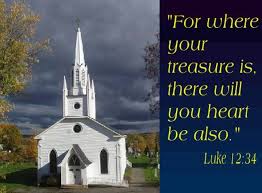 your God will be also.”
This oft-repeated passage
needs to be double-checked,
for what our Lord was saying
is not what we’d expect.
Most fund-raisers would put it
the other way around,
but faithful Christian stewards
in their giving have found
this principle of Jesus
to be completely true,
for where you put your money
your heart will be there, too.
“In heaven seek your treasure,
where thieves can never go.
Wherever is your treasure,
This oft-repeated passage
needs to be double-checked,
for what our Lord was saying
is not what we’d expect.
Most fund-raisers would put it
the other way around,
but faithful Christian stewards
in their giving have found
this principle of Jesus
to be completely true,
for where you put your money
your heart will be there, too.
Thursday, August 8, 2013
FIRST THINGS FIRST
Luke 12:22-31 (NRSV) - He said to his disciples, "Therefore I tell you, do not worry about your life, what you will eat, or about your body, what you will wear. 23 For life is more than food, and the body more than clothing. 24 Consider the ravens: they neither sow nor reap, they have neither storehouse nor barn, and yet God feeds them. Of how much more value are you than the birds! 25 And can any of you by worrying add a single hour to your span of life? 26 If then you are not able to do so small a thing as that, why do you worry about the rest? 27 Consider the lilies, how they grow: they neither toil nor spin; yet I tell you, even Solomon in all his glory was not clothed like one of these. 28 But if God so clothes the grass of the field, which is alive today and tomorrow is thrown into the oven, how much more will he clothe you--you of little faith! 29 And do not keep striving for what you are to eat and what you are to drink, and do not keep worrying. 30 For it is the nations of the world that strive after all these things, and your Father knows that you need them. 31 Instead, strive for his kingdom, and these things will be given to you as well.
Your food and drink and clothing, all
 are needed, it is true.
But do not concentrate on them,
as worldly people do.
For life is more than these things, and
anxiety is hell.
But if you seek God’s kingdom first,
God gives these things as well.
The One who feeds the ravens and
who clothes the lilies, too,
O you of little faith, will not
your God provide for you?
So rather than be anxious, serve
your God with words and deeds,
and God will prompt you what to pray
and satisfy your needs.
Your food and drink and clothing, all
 are needed, it is true.
But do not concentrate on them,
as worldly people do.
For life is more than these things, and
anxiety is hell.
But if you seek God’s kingdom first,
God gives these things as well.
The One who feeds the ravens and
who clothes the lilies, too,
O you of little faith, will not
your God provide for you?
So rather than be anxious, serve
your God with words and deeds,
and God will prompt you what to pray
and satisfy your needs.
Tuesday, August 6, 2013
BIGGER AND BETTER?
 Lectionary text: Luke 12:18 (NRSV) - Then he said, 'I will do this: I will pull down my barns and build larger ones, and there I will store all my grain and my goods.
Hear this, you proud go-getter:
Bigger does not mean better,
and getting more and more
is not what you’re here for!
(I wonder if they teach that rule
at any well-known business school?)
Monday, August 5, 2013
BEWARE OF GREED
Lectionary Text; Luke 12:13-21 (NRSV) - Someone in the crowd said to him, "Teacher, tell my brother to divide the family inheritance with me." 14 But he said to him, "Friend, who set me to be a judge or arbitrator over you?" 15 And he said to them, "Take care! Be on your guard against all kinds of greed; for one's life does not consist in the abundance of possessions." 16 Then he told them a parable: "The land of a rich man produced abundantly. 17 And he thought to himself, 'What should I do, for I have no place to store my crops?' 18 Then he said, 'I will do this: I will pull down my barns and build larger ones, and there I will store all my grain and my goods. 19 And I will say to my soul, 'Soul, you have ample goods laid up for many years; relax, eat, drink, be merry.' 20 But God said to him, 'You fool! This very night your life is being demanded of you. And the things you have prepared, whose will they be?' 21 So it is with those who store up treasures for themselves but are not rich toward God."
Beware of greed,
as it can lead
to dangerous obsessions.
For life does not consist
in the abundance of possessions.
Remember Jesus’ parable
about the wealthy man
who thought,
“I’ll build much larger barns
to store up all I can.
Then I’ll relax
and do the things
I’ve always yearned to do.”
But then God said,
“You fool!”
This night
life will depart from you.
And all these things
 |
| Parable of the Rich Fool, painting by Rembrandt, 1627 |
as it can lead
to dangerous obsessions.
For life does not consist
in the abundance of possessions.
Remember Jesus’ parable
about the wealthy man
who thought,
“I’ll build much larger barns
to store up all I can.
Then I’ll relax
and do the things
I’ve always yearned to do.”
But then God said,
“You fool!”
This night
life will depart from you.
And all these things
Friday, August 2, 2013
COMFORTING WORDS TO A WITNESS
Luke 12:11-12 (NRSV) - When they bring you before the synagogues, the rulers, and the authorities, do not worry about how you are to defend yourselves or what you are to say; 12 for the Holy Spirit will teach you at that very hour what you ought to say."
My life so far has never been at stake
when I have been “on trial” for Jesus’ sake.
But situations there have been when I
have had to tell someone the reason why
I now believe in him, or first believed,
and I can testify that I’ve received
the Holy Spirit’s help time and again.
I think I’m at a loss for words, and then
somehow I know exactly what to say,
and I am well aware there is no way
such thoughts as that I ever could have known
or been a faithful witness on my own.
O what relief to know that in that hour
I can depend upon the Spirit’s power!
 |
| Paul before Festus (Goodsalt Standard Publishing) |
My life so far has never been at stake
when I have been “on trial” for Jesus’ sake.
But situations there have been when I
have had to tell someone the reason why
I now believe in him, or first believed,
and I can testify that I’ve received
the Holy Spirit’s help time and again.
I think I’m at a loss for words, and then
somehow I know exactly what to say,
and I am well aware there is no way
such thoughts as that I ever could have known
or been a faithful witness on my own.
O what relief to know that in that hour
I can depend upon the Spirit’s power!
Thursday, August 1, 2013
A PERPLEXING PASSAGE
Luke 12:8-12 (NRSV) - "And I tell you, everyone who acknowledges me before others, the Son of Man also will acknowledge before the angels of God; 9 but whoever denies me before others will be denied before the angels of God. 10 And everyone who speaks a word against the Son of Man will be forgiven; but whoever blasphemes against the Holy Spirit will not be forgiven. 11 When they bring you before the synagogues, the rulers, and the authorities, do not worry about how you are to defend yourselves or what you are to say; 12 for the Holy Spirit will teach you at that very hour what you ought to say."
“Whoever says a captious word against the Son of Man
will be forgiven,” Jesus said. Does that mean someone can
speak ill of Christ, deny his truth, or use his name in vain
and not be held accountable for showing such disdain?
Before responding, take a look at what Jesus said next;
we have to see his words in their immediate context.
“The person who blasphemes against the Spirit,” he went on,
“will never be forgiven.” What conclusion can be drawn
from this austere assertion, which the Lord himself has made?
Among the Bible scholars much attention has been paid
to this perplexing saying, and they all do not agree.
A plausible solution to the text, it seems to me,
can be gained from the passages in which these words are used
in Mark’s and Matthew’s Gospels. We will be much less confused.
The sin against the Holy Ghost occurs when one denies
the goodness and the truth of God before one’s very eyes.
The question that this raises, as I think about a case
where someone having met the living Jesus face to face,
had seen his works and heard his words, but still did not believe,
is whether such a person did forgiveness yet receive.
Denying the plain truth of God in every word and deed ---
would that not be a sin against the Spirit? Yes, indeed!
|
| Painting by James Tissot |
will be forgiven,” Jesus said. Does that mean someone can
speak ill of Christ, deny his truth, or use his name in vain
and not be held accountable for showing such disdain?
Before responding, take a look at what Jesus said next;
we have to see his words in their immediate context.
“The person who blasphemes against the Spirit,” he went on,
“will never be forgiven.” What conclusion can be drawn
from this austere assertion, which the Lord himself has made?
Among the Bible scholars much attention has been paid
to this perplexing saying, and they all do not agree.
A plausible solution to the text, it seems to me,
can be gained from the passages in which these words are used
in Mark’s and Matthew’s Gospels. We will be much less confused.
The sin against the Holy Ghost occurs when one denies
the goodness and the truth of God before one’s very eyes.
The question that this raises, as I think about a case
where someone having met the living Jesus face to face,
had seen his works and heard his words, but still did not believe,
is whether such a person did forgiveness yet receive.
Denying the plain truth of God in every word and deed ---
would that not be a sin against the Spirit? Yes, indeed!
Wednesday, July 31, 2013
THE GREATEST SIGN
Luke 11:29-32 (NRSV) - When the crowds were increasing, he began to say, "This generation is an evil generation; it asks for a sign, but no sign will be given to it except the sign of Jonah. 30 For just as Jonah became a sign to the people of Nineveh, so the Son of Man will be to this generation. 31 The queen of the South will rise at the judgment with the people of this generation and condemn them, because she came from the ends of the earth to listen to the wisdom of Solomon, and see, something greater than Solomon is here! 32 The people of Nineveh will rise up at the judgment with this generation and condemn it, because they repented at the proclamation of Jonah, and see, something greater than Jonah is here!
Our generation seeks a sign and does not realize
how many signs have been displayed before their very eyes.
The Queen of Sheba traveled far, King Solomon to hear,
but someone who is far greater than Solomon is here.
The citizens of Nineveh repented, when they heard
the prophet Jonah’s proclamation of God’s holy word.
Our generation, like the one of Jesus’ time, I fear,
has failed to see that something greater than Jonah is here.
The teachings, and example, and the works of Jesus Christ
for every generation since his death should have sufficed.
 |
| Solomon receives the Queen of Sheba Painting by Edward Poynter, 1890 |
how many signs have been displayed before their very eyes.
The Queen of Sheba traveled far, King Solomon to hear,
but someone who is far greater than Solomon is here.
The citizens of Nineveh repented, when they heard
the prophet Jonah’s proclamation of God’s holy word.
Our generation, like the one of Jesus’ time, I fear,
has failed to see that something greater than Jonah is here.
The teachings, and example, and the works of Jesus Christ
for every generation since his death should have sufficed.
Subscribe to:
Posts (Atom)