Thursday, September 26, 2013

A TOUCHY TOPIC

Lectionary text: Luke 16:14-15 (NRSV) - The Pharisees, who were lovers of money, heard all this, and they ridiculed him. 15 So he said to them, "You are those who justify yourselves in the sight of others; but God knows your hearts; for what is prized by human beings is an abomination in the sight of God."

The Pharisees heard Jesus say, “You can’t serve God and money.”
Predictably they did not think what Jesus said was funny,
for they, Luke wrote, loved mammon, and in their own haughty view
they saw themselves as experts in religious matters, too.
And so they ridiculed him for the drastic things he said.
But Jesus, in his unique manner, censured them instead:
You Pharisees are doing what you have been from the start.
You justify yourself to others, but God knows your heart!”
What human beings value most and strive for day and night
becomes an idol and is thus abhorrent in God’s sight.
Could Jesus’ words not be applied to our society,
where monetary values govern the economy?
And would most people not react as did the Pharisees,
if any one in Jesus name should utter words like these?

Wednesday, September 25, 2013

DIVIDED LOYALTY

Lectionary text: Luke 16:13 (NRSV) - "No slave can serve two masters; for a slave will either hate the one and love the other, or be devoted to the one and despise the other. You cannot serve God and wealth."

No one can serve two masters,
and down through history
no great devotion has survived
divided loyalty
between God and some idol,
like power, wealth, or fame.
One cannot worship mammon
and pray in Jesus’ name.

Tuesday, September 24, 2013

IN MUCH AS IN LITTLE

Lectionary text: Luke 16:10 (NRSV) - "Whoever is faithful in a very little is faithful also in much; and whoever is dishonest in a very little is dishonest also in much."

The one who cheats in little things
        will cheat in big things, too.
Dishonest habits that we form
        determine what we do.

The little things are tell-tale clues;
        to be faithful in such
preindicates a person will
        be faithful, too, in much.

Monday, September 23, 2013

ETERNAL TENTS

Lectionary text: Luke 16:9 (NRSV) - And I tell you, make friends for yourselves by means of dishonest wealth so that when it is gone, they may welcome you into the eternal homes.

Eternal habitations:
the Greek word used means “tents.”
A literal translation
conveys a different sense.
One does not see a tent as
a permanent abode.
A tent is great for nomads,
those who are on the road.
And maybe that’s exactly
what Luke wanted to say,
for those who follow Jesus
are always on the way.
Yet God is ever with us
in our on-going quest,
and where God is our home is,
   and our eternal rest.

Sunday, September 22, 2013

THE PARABLE OF THE DISHONEST STEWARD

Lectionary passage: Luke 16:1-9 (NRSV) - Then Jesus said to the disciples, "There was a rich man who had a manager, and charges were brought to him that this man was squandering his property. 2 So he summoned him and said to him, 'What is this that I hear about you? Give me an accounting of your management, because you cannot be my manager any longer.' 3 Then the manager said to himself, 'What will I do, now that my master is taking the position away from me? I am not strong enough to dig, and I am ashamed to beg. 4 I have decided what to do so that, when I am dismissed as manager, people may welcome me into their homes.' 5 So, summoning his master's debtors one by one, he asked the first, 'How much do you owe my master?' 6 He answered, 'A hundred jugs of olive oil.' He said to him, 'Take your bill, sit down quickly, and make it fifty.' 7 Then he asked another, 'And how much do you owe?' He replied, 'A hundred containers of wheat.' He said to him, 'Take your bill and make it eighty.' 8 And his master commended the dishonest manager because he had acted shrewdly; for the children of this age are more shrewd in dealing with their own generation than are the children of light. 9 And I tell you, make friends for yourselves by means of dishonest wealth so that when it is gone, they may welcome you into the eternal homes.


Of all the parables of Christ this one may be the toughest
        for those who think it treats their views of honesty the roughest.
But it’s a comment on the fact that being shrewd and clever
        can win one many friends, for sure. It has been thus forever.
The steward had mismanaged all the holdings of his master.
        He knew when it was found out, he was heading for disaster.
He called his mater’s debtors and made sure they would be willing
        to take him in when he was fired, by lowering their billing.
He told each one to write down less than what each had been owing.
        The master praised his steward for the prudence he was showing!
Then Jesus said, “You, too, make friends, but not by being greedy.
        And as good stewards, use your funds to help the poor and needy.
“By kindness you will make friends now and have their salutation,
        when they receive you into God’s eternal habitation.

Saturday, September 21, 2013

THE OTHER PRODIGAL SON

Luke 15:25-32 (NRSV) - Now his elder son was in the field; and when he came and approached the house, he heard music and dancing. 26 He called one of the slaves and asked what was going on. 27 He replied, "Your brother has come, and your father has killed the fatted calf, because he has got him back safe and sound." 28 Then he became angry and refused to go in. His father came out and began to plead with him. 29 But he answered his father, "Listen! For all these years I have been working like a slave for you, and I have never disobeyed your command; yet you have never given me even a young goat so that I might celebrate with my friends. 30 But when this son of yours came back, who has devoured your property with prostitutes, you killed the fatted calf for him!" 31 Then the father said to him, "Son, you are always with me, and all that is mine is yours. 32 But we had to celebrate and rejoice, because this brother of yours was dead and has come to life; he was lost and has been found.'"


The Parable of the Prodigal Son                                          
        we call it familiarly.
The Parable of the Prodigal Sons,
        the title perhaps should be.

The elder son served his father quite well,
        and never did he depart.
His attitude showed, however, that he
        was prodigal in his heart.

Self-righteousness, and self-pity, and pride,
        resentment, and jealousy ---
I do not admire this prodigal son,
        because he’s too much like me!

Friday, September 20, 2013

TWO MORE POEMS ON THE PARABLE OF THE PRODIGAL SON

Luke 15:20 (NRSV) - So he set off and went to his father. But while he was still far off, his father saw him and was filled with compassion; he ran and put his arms around him and kissed him.


THE WAITING FATHER

Our loving God is infinitely kind,
       as those who turn and seek forgiveness find.
The wayward child who flees from Satan’s charms
       the Father runs to meet with open arms.
And heaven’s hosts echo the joyful sound,
       when any child who has been lost is found.


WELCOME HOME!

In all of heaven’s lexicons you comb,
are there two sweeter words than “Welcome home!”?

Thursday, September 19, 2013

COMING TO YOURSELF

Luke 15:17 (NRSV) - But when he came to himself he said, '"How many of my father's hired hands have bread enough and to spare, but here I am dying of hunger!"


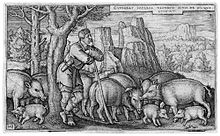
Engraving of the Prodigal Son as aswineherd
 by Hans Sebald Beham, 1538.(Wikipedia)
When you’ve wasted your life and you’ve wallowed in sin,  
        when you know it is folly to roam,
when you say to yourself, “What a fool I have been!”
        and you know that it’s time to go home,
when you you’re luck has run out and your friends are all gone,
        and you know in your heart you’ve been wrong,
you have come to yourself if you see the light dawn,
        and at last you know where you belong.
When your profligate bridges you’re ready to burn
        and your heart tells you what you must do,
you have come to yourself if you want to return
        to the Father who’s waiting for you.

Wednesday, September 18, 2013

PRODIGAL PARALLEL


Luke 15:11-32 (NRSV) - Then Jesus said, "There was a man who had two sons. 12 The younger of them said to his father, 'Father, give me the share of the property that will belong to me.' So he divided his property between them. 13 A few days later the younger son gathered all he had and traveled to a distant country, and there he squandered his property in dissolute living. 14 When he had spent everything, a severe famine took place throughout that country, and he began to be in need. 15 So he went and hired himself out to one of the citizens of that country, who sent him to his fields to feed the pigs. 16 He would gladly have filled himself with the pods that the pigs were eating; and no one gave him anything. 17 But when he came to himself he said, 'How many of my father's hired hands have bread enough and to spare, but here I am dying of hunger! 18 I will get up and go to my father, and I will say to him, "Father, I have sinned against heaven and before you; 19 I am no longer worthy to be called your son; treat me like one of your hired hands."' 20 So he set off and went to his father. But while he was still far off, his father saw him and was filled with compassion; he ran and put his arms around him and kissed him. 21 Then the son said to him, 'Father, I have sinned against heaven and before you; I am no longer worthy to be called your son.' 22 But the father said to his slaves, 'Quickly, bring out a robe--the best one--and put it on him; put a ring on his finger and sandals on his feet. 23 And get the fatted calf and kill it, and let us eat and celebrate; 24 for this son of mine was dead and is alive again; he was lost and is found!' And they began to celebrate. 25 "Now his elder son was in the field; and when he came and approached the house, he heard music and dancing. 26 He called one of the slaves and asked what was going on. 27 He replied, 'Your brother has come, and your father has killed the fatted calf, because he has got him back safe and sound.' 28 Then he became angry and refused to go in. His father came out and began to plead with him. 29 But he answered his father, 'Listen! For all these years I have been working like a slave for you, and I have never disobeyed your command; yet you have never given me even a young goat so that I might celebrate with my friends. 30 But when this son of yours came back, who has devoured your property with prostitutes, you killed the fatted calf for him!' 31 Then the father said to him, 'Son, you are always with me, and all that is mine is yours. 32 But we had to celebrate and rejoice, because this brother of yours was dead and has come to life; he was lost and has been found.'"

My brother Herb was seventeen, when he one day in May
got up at dawn, loaded his car, and quietly drove away.
He left a note to tell our parents not to worry, for
he’d make a fortune and not be a burden any more.
Before that morning I had never seen my father cry.
The news hit both my parents like a ton of bricks, and I,
a twelve-year-old, did not know what to think, or say, or do,
for why my brother would run off like that nobody knew.

Tuesday, September 17, 2013

“THIS FELLOW WELCOMES SINNERS”

Lectionary passage: Luke 15:1-10 (NRSV) -Now all the tax collectors and sinners were coming near to listen to him. 2 And the Pharisees and the scribes were grumbling and saying, "This fellow welcomes sinners and eats with them." 3 So he told them this parable: 4 "Which one of you, having a hundred sheep and losing one of them, does not leave the ninety-nine in the wilderness and go after the one that is  lost until he finds it? 5 When he has found it, he lays it on his shoulders and rejoices. 6 And when he comes home, he calls together his friends and neighbors, saying to them, 'Rejoice with me, for I have found my sheep that was lost.' 7 Just so, I tell you, there will be more joy in heaven over one sinner who repents than over ninety-nine righteous persons who need no repentance. 8 "Or what woman having ten silver coins, if she loses one of them, does not light a lamp, sweep the house, and search carefully until she finds it? 9 When she has found it, she calls together her friends and neighbors, saying, 'Rejoice with me, for I have found the coin that I had lost.' 10 Just so, I tell you, there is joy in the presence of the angels of God over one sinner who repents."

“This fellow welcomes sinners,” said the scribes and Pharisees.
        “They’re not the proper company to keep.”
So Jesus told this parable not guaranteed to please:
        “Which one of you, having a hundred sheep
and losing one of them would not leave all the rest behind
        and go to find the one that’s gone astray?
And how you do rejoice, when that lost sheep at last you find!
        You tell your friends, ‘I found my sheep today!’
Just so in heaven there will be much joy, I say to you ---
        more joy about one sinner who repents
than over nine and ninety righteous men and women, who
        need no repentance.” What he said makes sense,
but to his hearers was the illustration meaningful?
        Apparently it wasn’t clear, and so
to emphasize the point he told another parable
        to teach them what they didn’t want to know.
“What woman with ten silver coins, if she should lose just one,
         would not keep searching till the coin is found?
And when it’s found, she tells her neighbors that her search is done:
        ‘Rejoice with me, for my lost coin is found!’
Just so,” he said, “There’s joy among the angels of the Lord
        because of every sinner who repents.”
The fact that sinners came to him the Pharisees deplored,
        but Jesus hoped to win their penitence.

Wednesday, September 11, 2013

HATING FOR LOVE

Lectionary text: Luke 14:26 (NRSV) - "Whoever comes to me and does not hate father and mother, wife and children, brothers and sisters, yes, and even life itself, cannot be my disciple."

About our hating those we love
I hope I’ve got it straight:
It’s that we hate because we love,
not that we love to hate.

Monday, September 9, 2013

WHEN HATE IS LOVE

Lectionary text: Luke 14:26 (NRSV) - "Whoever comes to me and does not hate father and mother, wife and children, brothers and sisters, yes, and even life itself, cannot be my disciple."

Can one who loves as Jesus loves,
command someone to hate?
What Jesus is appealing for
is loyalty so great
that nothing else can come before
our faithfulness to him.
Beside our love for Jesus Christ
all human loves seem dim.
It’s not that Christ wants us to hate
those who are close to us.
To think that’s what this saying means
would be preposterous.
But ties of home and family
should never interfere
with our obedience to Christ.
That’s what he’s saying here.

Friday, September 6, 2013

TO BE A DISCIPLE

Lestionary passage: Luke 14:25-33 (NRSV) - Now large crowds were traveling with him; and he turned and said to them, 26 "Whoever comes to me and does not hate father and mother, wife and children, brothers and sisters, yes, and even life itself, cannot be my disciple. 27 Whoever does not carry the cross and follow me cannot be my disciple. 28 For which of you, intending to build a tower, does not first sit down and estimate the cost, to see whether he has enough to complete it? 29 Otherwise, when he has laid a foundation and is not able to finish, all who see it will begin to ridicule him, 30 saying, 'This fellow began to build and was not able to finish.' 31 Or what king, going out to wage war against another king, will not sit down first and consider whether he is able with ten thousand to oppose the one who comes against him with twenty thousand? 32 If he cannot, then, while the other is still far away, he sends a delegation and asks for the terms of peace. 33 So therefore, none of you can become my disciple if you do not give up all your possessions.

To be a disciple of Jesus today
        means seeing our riches as loss,
to follow the truth, and the life, and the way,
        and bearing, like Jesus, our cross.

To be a disciple of Jesus demands
        that our love for him be so great
that all earthly ties that obscure his commands
        in light of Christ’s love are as hate.

To be a disciple means counting the cost
        and knowing the price we must pay.
It means not regretting what we may have lost,
        and giving possessions away.

To be a disciple of Jesus today
        means being the salt of the earth.
But if all its saltiness faded away,
        how much would the salt then be worth?

To be a disciple of Jesus today
        is not that much different from then,
and what he said then he would still want to say
        in challenging women and men.

Wednesday, September 4, 2013

TWO MORE LECTIONARY POEMS

Lectionary passage: Luke 14:7-11 (NRSV) -  When he noticed how the guests chose the places of honor, he told them a parable. 8 "When you are invited by someone to a wedding banquet, do not sit down at the place of honor, in case someone more distinguished than you has been invited by your host; 9 and the host who invited both of you may come and say to you, 'Give this person your place,' and then in disgrace you would start to take the lowest place. 10 But when you are invited, go and sit down at the lowest place, so that when your host comes, he may say to you, 'Friend, move up higher'; then you will be honored in the presence of all who sit at the table with you. 11 For all who exalt themselves will be humbled, and those who humble themselves will be exalted."

MOVE UP, FRIEND

When he saw the guests were vying                                
with each other and were trying
to attain the seats of honor at the feast,
Jesus said that at a wedding
banquet they should not be heading
for the seats of greatest honor but the least.

“If you seek the highest place, then
you may wind up in disgrace, when
your host moves you to the very lowest end.
How much better,” Jesus told them,
to instruct as well as scold them,
for the host to say to you, ‘Move up, my friend!’”

Lectionary passage: Luke 14:12-14 (NRSV) -  He said also to the one who had invited him, "When you give a luncheon or a dinner, do not invite your friends or your brothers or your relatives or rich neighbors, in case they may invite you in return, and you would be repaid. 13 But when you give a banquet, invite the poor, the crippled, the lame, and the blind. 14 And you will be blessed, because they cannot repay you, for you will be repaid at the resurrection of the righteous."

AND NOW, TO OUR HOST. . .

How he made those guests all squirm,
as in manner clear and firm
Jesus showed them how good etiquette would look.
Then he turned, as was his way,
to his dinner host that day,
for he would not let the man get off the hook:

“When your guest list you compose,
do not limit it to those
who you think may then invite you in return.
Ask the crippled, poor, and blind.
You’ll be blessed for being kind,
and the righteous resurrection you will earn.”

Tuesday, September 3, 2013

ANOTHER SABBATH HEALING

"They were watching him closely."
Lectionary passage: Luke 14:1-6 (NRSV) - On one occasion when Jesus was going to the house of a leader of the Pharisees to eat a meal on the sabbath, they were watching him closely. 2 Just then, in front of him, there was a man who had dropsy. 3 And Jesus asked the lawyers and Pharisees, "Is it lawful to cure people on the sabbath, or not?" 4 But they were silent. So Jesus took him and healed him, and sent him away. 5 Then he said to them, "If one of you has a child or an ox that has fallen into a well, will you not immediately pull it out on a sabbath day?" 6 And they could not reply to this.


On a sabbath day when Jesus was invited out to eat          
        by a leader of the Pharisees, he knew,
when a man appeared with dropsy and was standing at his feet,
        they were watching him to see what he would do.

“On the sabbath if your child or ox should fall into a well,
        would you not,” asked Jesus, “pull it out that day?”
All the lawyers and the Pharisees were nonplussed for a spell;
        so he healed the man and sent him on his way.

Now, to keep the sabbath holy is important, it is true.
        Nor would Jesus ever have it otherwise.
But if on the sabbath acts of love and mercy you should do,
        you will keep the day more holy in God’s eyes.